
Multi Jet Fusion vs. SLS: A Comprehensive Comparison for 3D Printing
A detailed comparison of Multi Jet Fusion and Selective Laser Sintering, highlighting speed, cost, and geometric capabilities.
Understanding Multi Jet Fusion (MJF) Technology
Multi Jet Fusion (MJF), pioneered by HP, is an additive manufacturing technology that produces parts with exceptional detail and accuracy. Unlike Selective Laser Sintering (SLS), which uses a laser to fuse powder particles, MJF employs inkjet arrays to selectively apply fusing and detailing agents across a bed of nylon powder. A heating element then passes over the bed, causing the areas treated with the fusing agent to melt and solidify, layer by layer. This process allows for faster build speeds and more consistent part properties compared to SLS.
One of the key advantages of MJF is its ability to produce parts with isotropic mechanical properties, meaning the strength and stiffness are uniform in all directions. This is crucial for functional prototypes and end-use parts that require consistent performance. Furthermore, MJF’s precise control over the fusing process enables the creation of intricate geometries and fine details that are often challenging to achieve with other 3D printing methods. The surface finish of MJF parts is also generally smoother than SLS, reducing the need for post-processing.
Exploring Selective Laser Sintering (SLS)
Selective Laser Sintering (SLS) is another powder bed fusion technology widely used in 3D printing. In SLS, a high-powered laser selectively sinters (fuses) powder particles together, layer by layer, to create a three-dimensional object. After each layer is sintered, the build platform lowers, a new layer of powder is spread across the surface, and the process repeats until the part is complete. SLS is known for its ability to produce strong and durable parts from a variety of materials, including nylon, elastomers, and composites.
While SLS offers excellent material properties and design freedom, it typically involves longer build times compared to MJF. The laser sintering process can be slower than the inkjet-based fusing process used in MJF, especially for parts with complex geometries. SLS parts may also exhibit a slightly rougher surface finish than MJF parts, which can require additional post-processing steps like sanding or polishing. However, SLS remains a popular choice for applications requiring high strength and chemical resistance.
Speed and Throughput: MJF's Advantage
When it comes to speed and throughput, MJF generally outperforms SLS. The inkjet-based fusing process in MJF allows for faster layer times compared to the laser sintering process in SLS. MJF can also print more parts in a single build, maximizing throughput and reducing the cost per part. This is particularly advantageous for high-volume production runs or when quick turnaround times are critical. The ability to nest parts closely together in the build volume further enhances MJF’s efficiency.
SLS, while reliable, typically requires more time to complete a build, especially for parts with intricate designs or large volumes. The laser scanning process can be time-consuming, and the need for support structures in some SLS applications can further increase build times. For companies seeking to rapidly iterate on designs or produce large quantities of parts, MJF offers a significant advantage in terms of speed and efficiency.
Cost-Effectiveness: A Detailed Comparison
The cost-effectiveness of MJF and SLS depends on several factors, including material costs, machine costs, and production volume. While the initial investment in an MJF printer can be higher than an SLS printer, MJF’s faster build speeds and higher throughput can lead to lower per-part costs, especially for larger production runs. The ability to nest parts efficiently in the build volume also contributes to MJF’s cost advantage.
SLS can be a more cost-effective option for smaller production runs or when using less expensive materials. However, the longer build times and potential need for support structures can increase the overall cost per part. Furthermore, the post-processing requirements for SLS parts, such as sanding or polishing, can add to the total cost. A thorough cost analysis, considering all relevant factors, is essential to determine the most cost-effective technology for a specific application.
Geometric Complexity: Which Technology Excels?
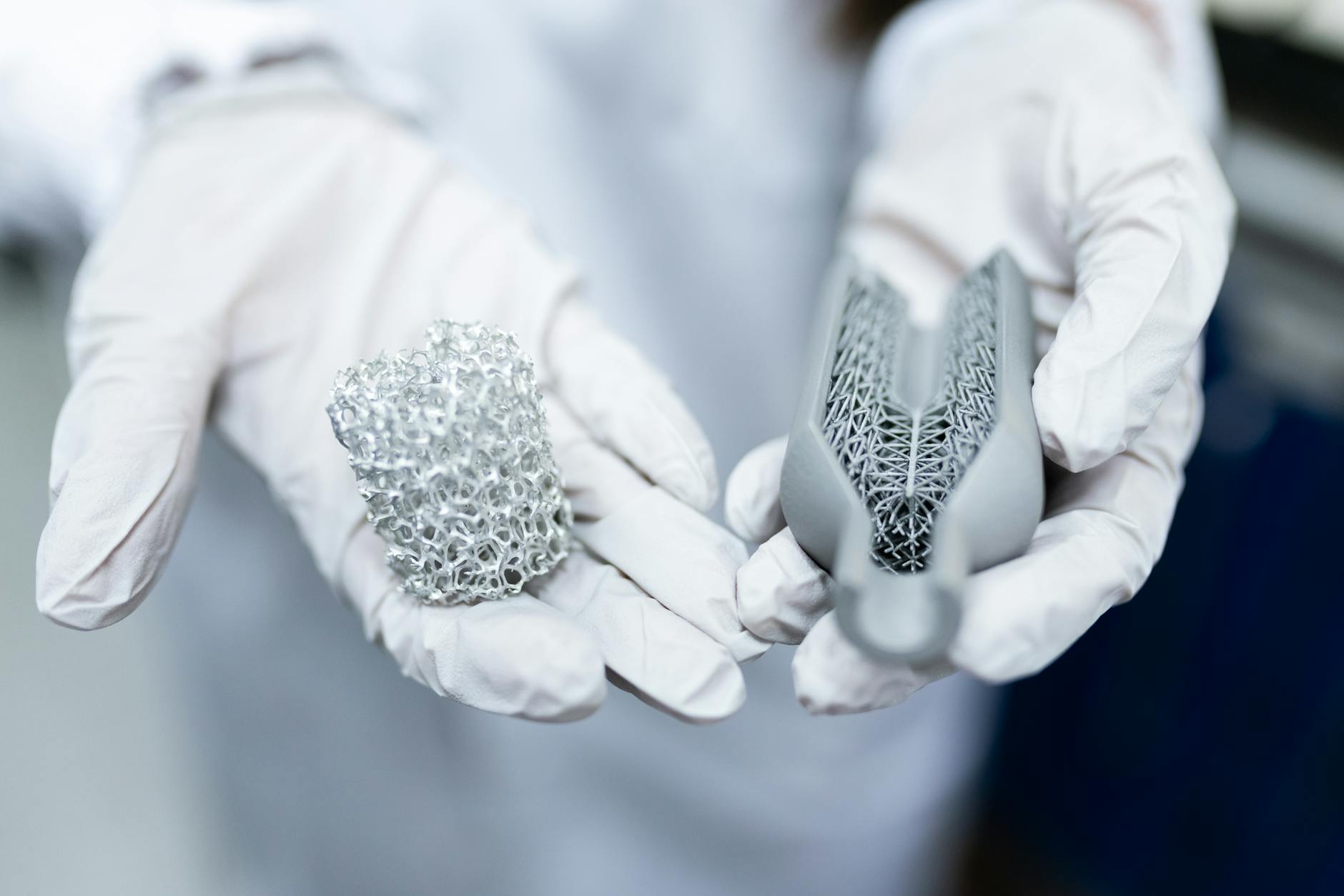
Both MJF and SLS offer excellent design freedom and the ability to create complex geometries. However, MJF’s precise control over the fusing process allows for the creation of finer details and more intricate designs compared to SLS. MJF can produce parts with thinner walls, sharper edges, and more complex internal structures. The smoother surface finish of MJF parts also enhances their aesthetic appeal and reduces the need for post-processing.
SLS is also capable of producing complex geometries, but it may require support structures for certain designs, which can add to the build time and material consumption. The removal of support structures can also leave behind surface blemishes that require post-processing. Overall, MJF offers a slight advantage in terms of geometric complexity and surface finish, making it a preferred choice for applications requiring intricate designs and high aesthetic standards.
Material Selection and Properties
Both MJF and SLS primarily utilize nylon materials, particularly PA12, known for its excellent mechanical properties, chemical resistance, and thermal stability. However, SLS offers a broader range of material options, including elastomers, composites, and other specialized polymers. MJF’s material selection is currently more limited, but HP continues to expand its material portfolio.
The mechanical properties of parts produced by MJF and SLS are generally comparable, with both technologies capable of producing strong and durable parts. However, MJF parts tend to exhibit more isotropic properties, meaning their strength and stiffness are uniform in all directions. This is due to the more controlled fusing process in MJF, which results in more consistent material properties throughout the part. The choice of material and its properties will ultimately depend on the specific requirements of the application.
Key Takeaways
- Multi Jet Fusion
- MJF
- Selective Laser Sintering
- SLS
- 3D Printing
- Additive Manufacturing
- Rapid Prototyping
- Manufacturing
- Technology
- Nylon PA12